
In a market where businesses are increasingly investing in visibility, advertising and digital presence, being seen is no longer enough. The real question is whether customers understand what makes your brand worth choosing.
Walk into a supermarket in Nairobi, Lagos, Accra or Johannesburg. Look at the shelves. Hundreds of products compete for attention. Their packaging is carefully designed, their colours deliberately selected and their promises strategically communicated.
Now consider the businesses outside those shelves. Banks, telecommunications companies, professional service firms, retailers, technology startups and countless SMEs are competing for the same scarce resource: customer attention.
Everyone wants to be recognised. Everyone wants to be remembered. And almost everyone claims to offer something exceptional.
But when customers are faced with several businesses offering seemingly similar products or services, what actually makes them choose one over another?
The answer often begins with brand positioning.
Beyond the logo: What does your brand actually represent?
Brand positioning is frequently misunderstood as a visual exercise. Businesses invest in logos, colour palettes, websites, brand guidelines and marketing materials, assuming that a more polished identity will automatically make them more competitive.
These elements matter. They create recognition and help establish a consistent identity. But they do not, on their own, determine how a brand is positioned in the market.
Positioning is about the space a brand occupies in the minds of its intended customers. It is the combination of associations, expectations and perceived value that influences how people distinguish one business from another.
Think about the Kenyan telecommunications market. Customers do not simply distinguish providers by their logos. They develop perceptions around network reliability, affordability, data packages, customer service and the convenience of accessing financial services.
Similarly, when people consider financial institutions, they may associate particular brands with accessibility, security, innovation, convenience or personalised service.
These associations are not created by visual identity alone. They emerge from the promises brands make, the experiences they deliver and the consistency with which they demonstrate their value.
A brand can look exceptional and still struggle to communicate why it matters.
That is a positioning problem.
The African market is not one market
One of the most important considerations for businesses operating in Africa is recognising the diversity of the markets they seek to serve.
Africa is not a single consumer market with uniform preferences, purchasing behaviour or cultural expectations.
A brand expanding from Kenya into Nigeria, Ghana, Tanzania or South Africa cannot simply replicate its existing marketing strategy and assume that it will resonate in every market.
Consumer expectations differ across countries, industries, income segments, languages and cultural contexts. Even within the same country, the priorities of an urban professional in Nairobi may differ considerably from those of a small-business owner in Kisumu or a household in a rural community.
Consider a financial services brand seeking to expand its reach.
In one market, its competitive advantage may depend on convenient mobile transactions. In another, customers may place greater emphasis on physical access, institutional trust or the availability of reliable customer support.
The underlying service may be similar, but the reasons customers choose it can differ.
The same applies to retail, education, professional services, telecommunications and consumer goods.
Successful positioning therefore requires more than understanding what a business wants to communicate. It requires understanding the people, circumstances and market realities to which that communication must respond.
A brand must be consistent in what it stands for, but intelligent in how it expresses that value across different markets.
Why being everything to everyone is a costly strategy
Many businesses struggle to establish a distinctive market position because they are reluctant to narrow their message.
Their websites promise quality, affordability, innovation, reliability, exceptional customer service and personalised solutions. Their marketing communication attempts to appeal to almost every conceivable customer segment.
The intention is understandable. Businesses want to attract as many customers as possible.
However, when everything is a priority, nothing becomes particularly memorable.
Imagine two professional consulting firms competing for the same corporate clients.
The first describes itself as a leading provider of innovative, high-quality, client-focused and comprehensive business solutions.
The second positions itself around helping growing businesses navigate complex regulatory environments through practical, commercially informed advice.
Both may provide excellent services. However, the second communicates a more identifiable proposition. It gives prospective clients a clearer understanding of what the firm does, whom it serves and the particular value it seeks to deliver.
This is the power of differentiation.
A strong position does not necessarily require a business to invent an entirely new category. Sometimes, it requires identifying an underserved customer need, communicating a specific strength or delivering an existing service in a distinctly better way.
The objective is not to appeal to everyone. It is to become relevant and memorable to the customers who matter most.
Price is not always your strongest competitive advantage
Across many African markets, purchasing power, inflation, currency movements and household budget constraints influence consumer decisions.
Businesses understandably respond by emphasising affordability, discounts and promotional offers.
But competing primarily on price can become a difficult long-term strategy, particularly when competitors can easily match or undercut an offer.
Customers do not always choose the cheapest option. They assess what they receive in relation to what they spend, including quality, convenience, reliability, accessibility and the confidence that a product or service will deliver as promised.
For a business selling agricultural equipment, value might mean durability, access to spare parts and dependable after-sales support.
For a private healthcare provider, it could mean professional competence, accessible facilities, clear communication and confidence in the quality of care.
For an educational institution, it might involve the relevance of its programmes, the quality of instruction, recognised qualifications and the practical outcomes students can expect.
The strongest positioning strategies recognise that value is multidimensional.
Rather than asking how cheaply a business can offer its products, management should consider what customers genuinely value and how the business can deliver that value more convincingly than its competitors.
Trust is not a marketing slogan. It is a brand-building asset.
Trust occupies a particularly important place in markets where customers must make decisions about unfamiliar businesses, products or service providers.
Consider a small enterprise deciding which financial institution should handle its business transactions. Or a company selecting a professional firm to manage sensitive tax, audit or legal matters.
The decision involves more than comparing prices or reviewing promotional messages. Customers want confidence that the organisation is competent, dependable and capable of delivering what it promises.
This confidence is built through experience.
It develops when a business communicates transparently, honours its commitments, handles complaints responsibly, maintains consistent service standards and demonstrates genuine understanding of its customers.
In this sense, every customer interaction contributes to brand positioning.
A business may spend considerable resources presenting itself as customer-focused, but if customers struggle to receive assistance, the actual experience contradicts the intended position.
The market will ultimately form its own opinion.
And that opinion can be considerably more influential than the message appearing on a company's website.
Your competitors are positioning their brands. Are you?
Brand positioning does not happen in isolation. Every business operates within a competitive environment in which other organisations are actively shaping customer expectations.
Some compete through price. Others emphasise expertise, convenience, innovation, heritage, accessibility or customer experience.
Understanding these positions is essential because differentiation becomes difficult when a business does not know what its competitors already represent.
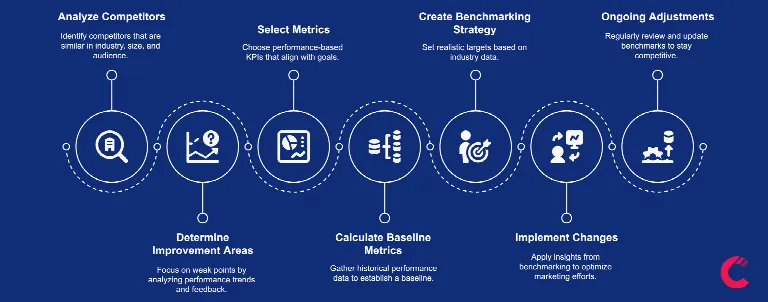
A meaningful positioning exercise should examine several questions:
- Market perception: What do customers currently associate with your brand?
- Competitive landscape: How are competing businesses positioning themselves, and where do their propositions overlap?
- Customer priorities: What influences purchasing decisions within your target market?
- Distinctive value: What can your business credibly offer that customers would struggle to find elsewhere?
- Brand consistency: Does your communication reflect the actual experience customers receive?
- Market relevance: Is your positioning still aligned with changing customer expectations and market conditions?
These questions should not be answered through assumptions or internal discussions alone.
They require research, customer feedback, competitor analysis and an honest assessment of how the market perceives the business.
Without this understanding, companies risk investing in campaigns that increase visibility without strengthening their competitive position.
Positioning is a business decision, not just a marketing decision
One of the biggest misconceptions about branding is that it belongs exclusively to the marketing department.
In reality, brand positioning has implications across the entire organisation.
It influences the products and services a business develops, the customers it prioritises, the markets it enters, the prices it charges and the experience it seeks to deliver.
A business positioning itself around premium quality must ensure that its products, service standards, distribution and customer experience support that promise.
An organisation positioning itself around accessibility must make it genuinely easier for customers to find, engage with and purchase from it.
A company promising innovation must demonstrate that commitment through its solutions, processes and approach to customer needs.
In other words, positioning must be reflected in business operations, not confined to advertising campaigns.
The most effective brands are those whose internal capabilities and external promises reinforce one another.
So, what does your brand stand for?
In a crowded marketplace, recognition is valuable. But recognition without a clear identity is difficult to convert into preference, loyalty and sustainable growth.
Customers should have a reason to remember your business, a reason to trust it and, ultimately, a reason to choose it.
That reason must be deliberate.
It begins with understanding your market, examining your competitive environment, listening to customers and identifying the value your business is genuinely equipped to deliver.
It also requires the courage to make strategic choices about what your brand should represent and the discipline to communicate that position consistently.
For African businesses seeking to grow beyond their immediate markets, this becomes even more important. Expansion introduces new competitors, different customer expectations and unfamiliar market dynamics. A recognisable identity must be supported by a proposition that remains relevant wherever the business operates.
Your brand does not need to be everything to everyone. It needs to mean something to the right people.
At Sahihi Media, we believe that stronger brands begin with better understanding. Through brand and market intelligence, we help businesses examine how they are perceived, understand their competitive environments and identify opportunities to build more distinctive market positions.
Because before you can own a place in the market, you must first understand the place your brand occupies in the minds of the people you serve.